








































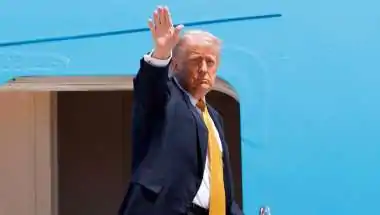

In a significant de-escalation of heightened tensions, US President Donald Trump declared a pause in impending military actions against Iran. The announcement comes after Tehran confirmed its acceptance of a two-week ceasefire, a move seen as a crucial step towards preventing further conflict in the volatile Middle East region.
Reports from multiple international sources indicate that Iran's Supreme National Security Council formally agreed to the temporary halt in hostilities. A pivotal component of this agreement involves Iran's commitment to reopen the Strait of Hormuz, a critical choke point for global oil shipments, which had recently been a focal point of contention.
Immediate Impact on Global Shipping and Regional Stability
The Strait of Hormuz, linking the Persian Gulf with the Arabian Sea and beyond, is fundamental to global energy markets. Its closure, or even the threat of it, sends ripples through international economies. Iran's pledge to ensure its reopening offers immediate relief to maritime traffic and potentially stabilizes oil prices that have fluctuated with geopolitical uncertainty.
This two-week window provides a much-needed opportunity for diplomatic efforts to take hold. International observers are cautiously optimistic that the pause could pave the way for more sustained negotiations, though the path ahead remains fraught with challenges given the deep-seated grievances between the two nations.
The Road Ahead: Diplomacy and De-escalation
The sudden breakthrough follows weeks of escalating rhetoric and confrontational actions that brought the region to the brink of open conflict. The specifics of how this ceasefire was brokered remain under wraps, but it underscores the persistent, often behind-the-scenes, efforts by various international actors to prevent a full-blown war.
While the immediate threat of military engagement appears to have receded, the underlying issues that fuel the US-Iran standoff persist. Analysts suggest that the next two weeks will be critical in determining whether this temporary truce can evolve into a more permanent resolution or if it merely serves as a brief interlude before renewed tensions. The Middle East, a region often at the crossroads of global geopolitical dynamics, continues to witness significant developments, from diplomatic breakthroughs to remarkable achievements in other spheres, as exemplified by figures like Graham Arnold guiding Iraq to World Cup Qualification, highlighting the diverse narratives emerging from the region.
FAQ
- What is the Strait of Hormuz and why is it important? The Strait of Hormuz is a narrow, strategically vital waterway connecting the Persian Gulf to the Arabian Sea. It is the world's most important oil transit chokepoint, with approximately one-fifth of global oil consumption passing through it daily. Its importance lies in its role in global energy supply and its potential to disrupt international trade if threatened or closed.
- What led to the recent tensions between the US and Iran? Recent tensions between the US and Iran stemmed from a complex interplay of factors, including the US withdrawal from the 2015 Iran nuclear deal, the re-imposition of crippling sanctions, and a series of incidents in the Persian Gulf, such as attacks on oil tankers and drone shoot-downs, alongside ongoing disputes over Iran's nuclear program and regional influence.
Stay tuned to GulfWire News for the latest developments on this unfolding situation.