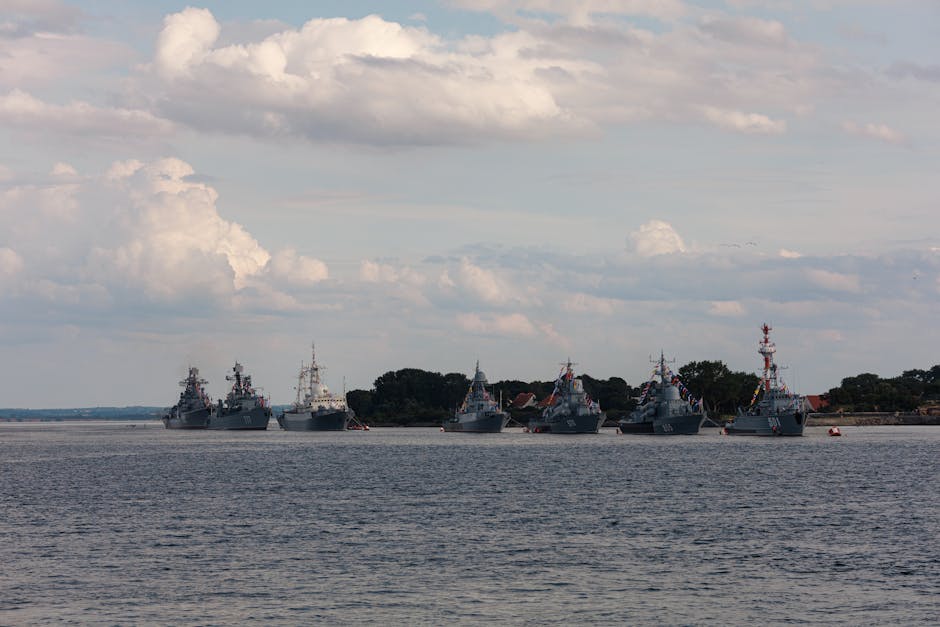











































Iran’s Revolutionary Guard Navy has issued a potent warning, declaring that the strategic Strait of Hormuz will 'never return to its former state' for the United States and Israel. This forceful pronouncement underlines Tehran’s resolve to reshape maritime dynamics in the crucial waterway, which connects the Persian Gulf to the Arabian Sea.
Rear Admiral Alireza Tangsiri, Commander of the IRGC Navy, articulated this vision, emphasizing Iran's intention to implement a 'new Persian Gulf order.' This emerging order, according to Iranian authorities, will fundamentally alter how foreign naval forces, particularly those of the US and Israel, operate in the region.
The Strait's Pivotal Role in Global Trade
The Strait of Hormuz stands as the world's most vital oil transit chokepoint, through which roughly a fifth of global petroleum consumption passes daily. Its strategic significance cannot be overstated, influencing international energy markets and geopolitical stability.
? Did You Know? The Strait of Hormuz is only about 39 kilometers (21 nautical miles) wide at its narrowest point, making it a highly constrained yet essential passage for global shipping.
This narrow passage is bordered by Iran to the north and the UAE and Oman to the south, making any declaration of altered status a matter of immediate international concern. The statements from Tehran reflect a long-standing assertion of regional dominance over the Gulf waters.
Asserting a New Regional Order
Iranian officials have consistently portrayed the presence of non-regional powers in the Persian Gulf as a source of instability. The latest declaration reinforces this perspective, suggesting a more assertive Iranian role in controlling transit and security within the Strait.
This development comes amidst persistent tensions between Iran and Western powers, particularly the US, over various issues ranging from its nuclear program to regional proxy conflicts. Diplomatic efforts, though often fraught, continue to seek avenues for de-escalation, even as statements like these raise the stakes. For insights into past allegations of secret talks, you might find this relevant: Trump Alleges Secret US-Iran Talks with Parliament Speaker; Tehran Issues Firm Denial.
Implications for US and Israeli Operations
The warning from the IRGC Navy directly challenges the established operational norms for the US Navy's Fifth Fleet, based in Bahrain, and other international maritime forces. Any attempt to enforce a 'new order' could lead to heightened friction in an already sensitive maritime environment.
Israel, while not directly bordering the Gulf, views Iran as its primary regional adversary. Any move by Iran to restrict or alter access through the Strait would be perceived as a significant threat to regional security and global trade routes, potentially prompting counter-responses.
Historical Flashpoints and Escalation
The Strait of Hormuz has been the scene of numerous confrontations and incidents over the decades, serving as a flashpoint for regional and international tensions. Past instances have included tanker attacks, seizures, and near-misses between naval vessels, highlighting the delicate balance of power.
As Iran pushes for a redefinition of access, the international community remains vigilant about potential escalations. The strategic implications are vast, impacting not just military deployments but also global energy security and economic stability. Understanding potential strategic assessments is key; consider reading: Reports: AI Deployed to Identify First Thousand Targets in Iran Scenario.
Stay tuned to GulfWire News for the latest developments on this critical geopolitical issue.